 All antler chews ship FREE


I've been in the antler business for almost a decade now, and if there's one thing I've learned, it's that not all "chew safely" advice out there is written by someone who's actually watched thousands of dogs work through thousands of antlers. Most of it is copy pasted from the same three vet blog posts.
So here's what actually matters, the stuff I'd tell a friend picking out their first antler chew for a dog who's never had one.

1. Blunt the tips, every time
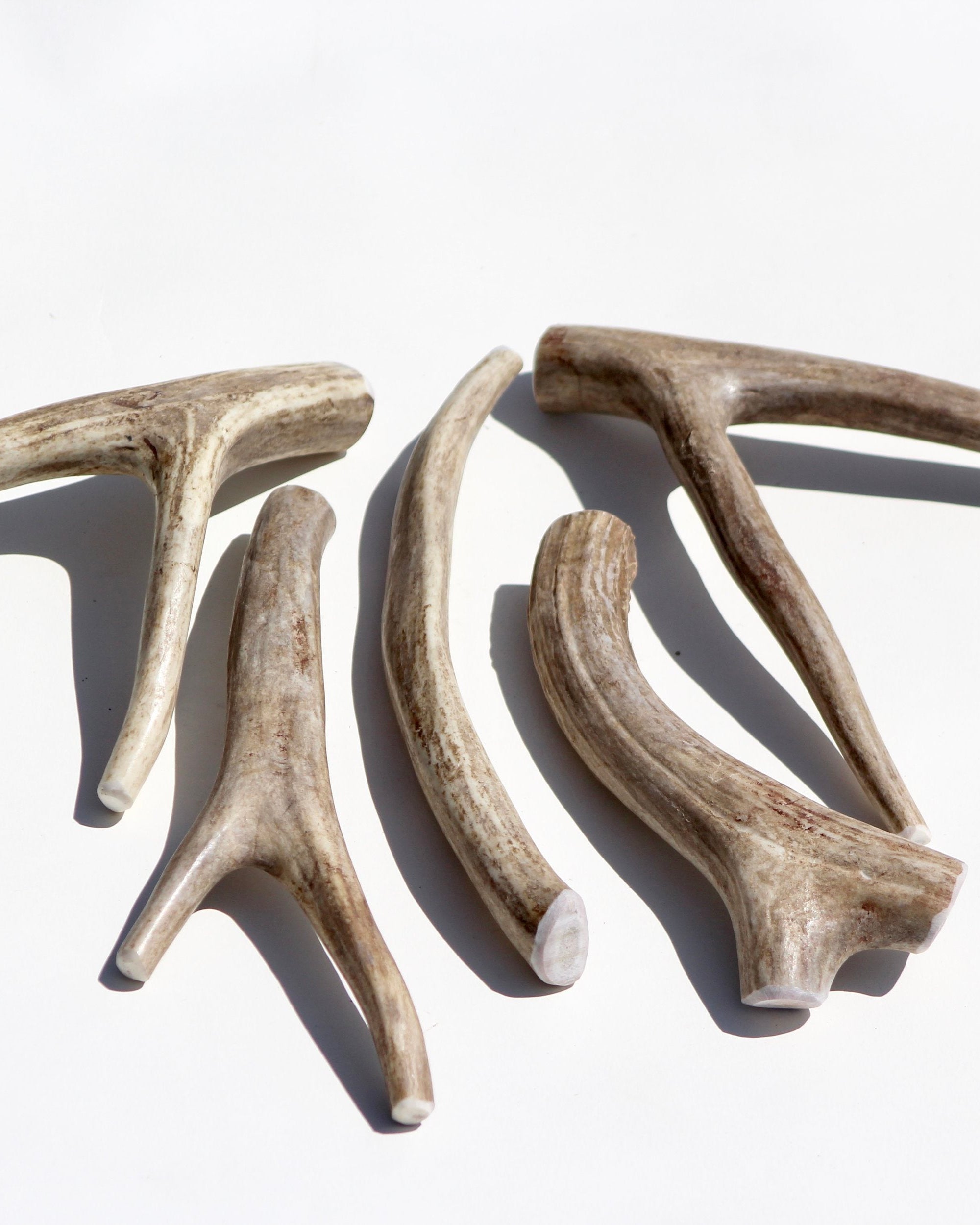
The tip of an antler is its densest, narrowest point, and it's exactly where dogs get tempted to stop gnawing and start crushing. That instinct to bite down hard and try to snap off a piece almost always shows up at the tip first.
This is why you should never hand your dog an antler with a sharp, unblunted point. Narrow deer tines are the worst offenders here. All that hardness packed into a thin spike practically invites a dog to go after it like a stick to break, not a chew to work.
A properly blunted tip removes that temptation. It rounds off the danger zone so your dog's mouth naturally settles into gnawing instead of cracking.

2. Go thick
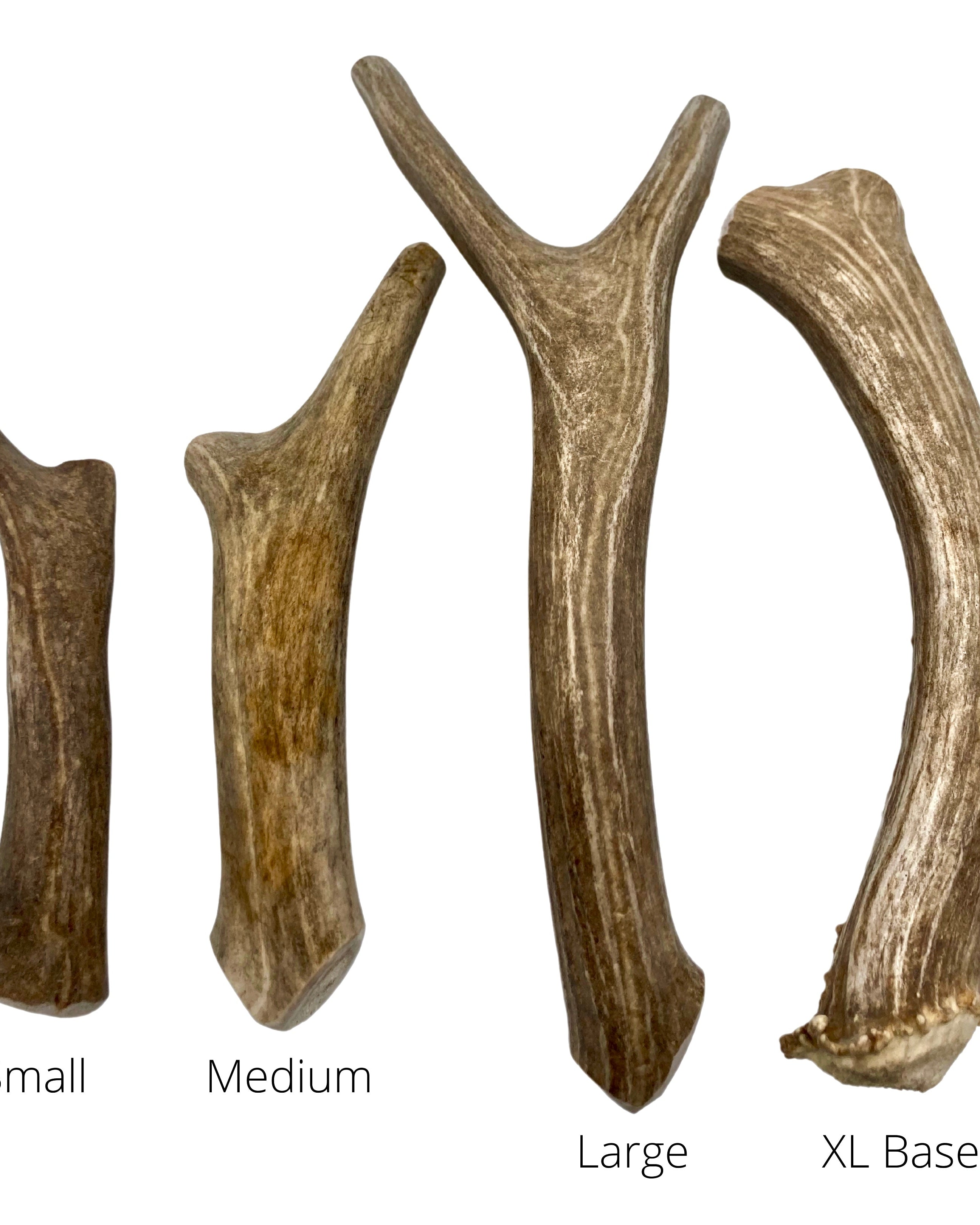
If your dog is a "destroyer," the kind who treats every chew like a personal challenge to demolish, thin isn't going to cut it. A thick chew removes the leverage a dog needs to crush or snap it, so gnawing becomes the only real option.
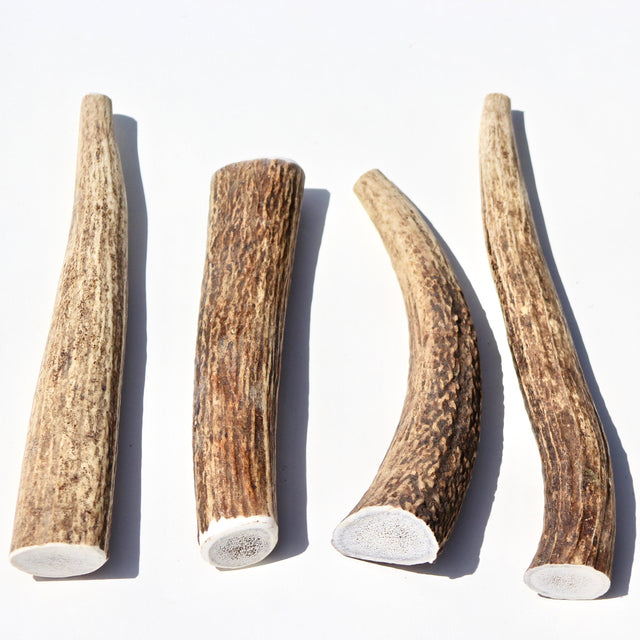
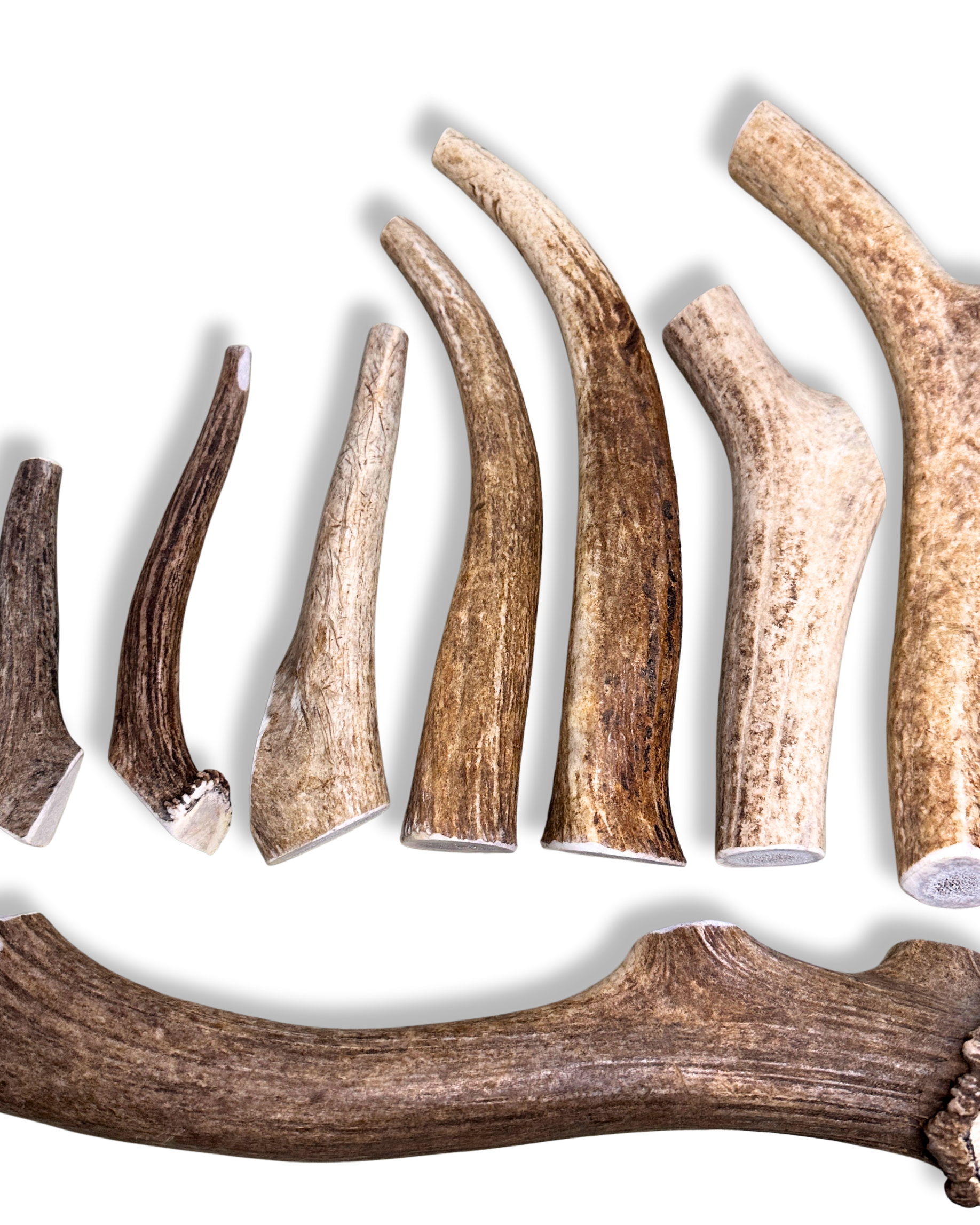
Elk beams are the gold standard here. They're substantial, durable, and cut specifically with these dogs in mind. If your pup has gone through every "durable" chew you've bought and left them in pieces, this is the category to try next.

3. Listen for clattering
This one gets skipped constantly, and it shouldn't. If you can hear your dog clattering or rattling a chew against their teeth, that's your cue to step in.
Good chewing sounds like steady gnawing. It's controlled, rhythmic, focused. Clattering means your dog has stopped working the chew and started playing with it in a way that puts more force on the teeth than it should.
When you hear it, calmly take the chew, say something like "all done," and try again another day. This isn't a punishment, and it doesn't mean the chew is bad. Dogs have moods and off days just like we do. Some days they're locked in and focused, other days they'd rather toss it around the living room. Both are normal. Just don't let the tossing around version continue unsupervised.

4. Go soft if you need to
Antlers earn their reputation because they last. That density is the whole point. But if you're watching out for your dog's tooth strength, or you just want to ease them in, softer antler options exist and they're worth knowing about.
The trade off is durability. A softer chew won't last nearly as long as a dense elk beam, and that's true across the board, not just with antlers. What you gain is peace of mind.
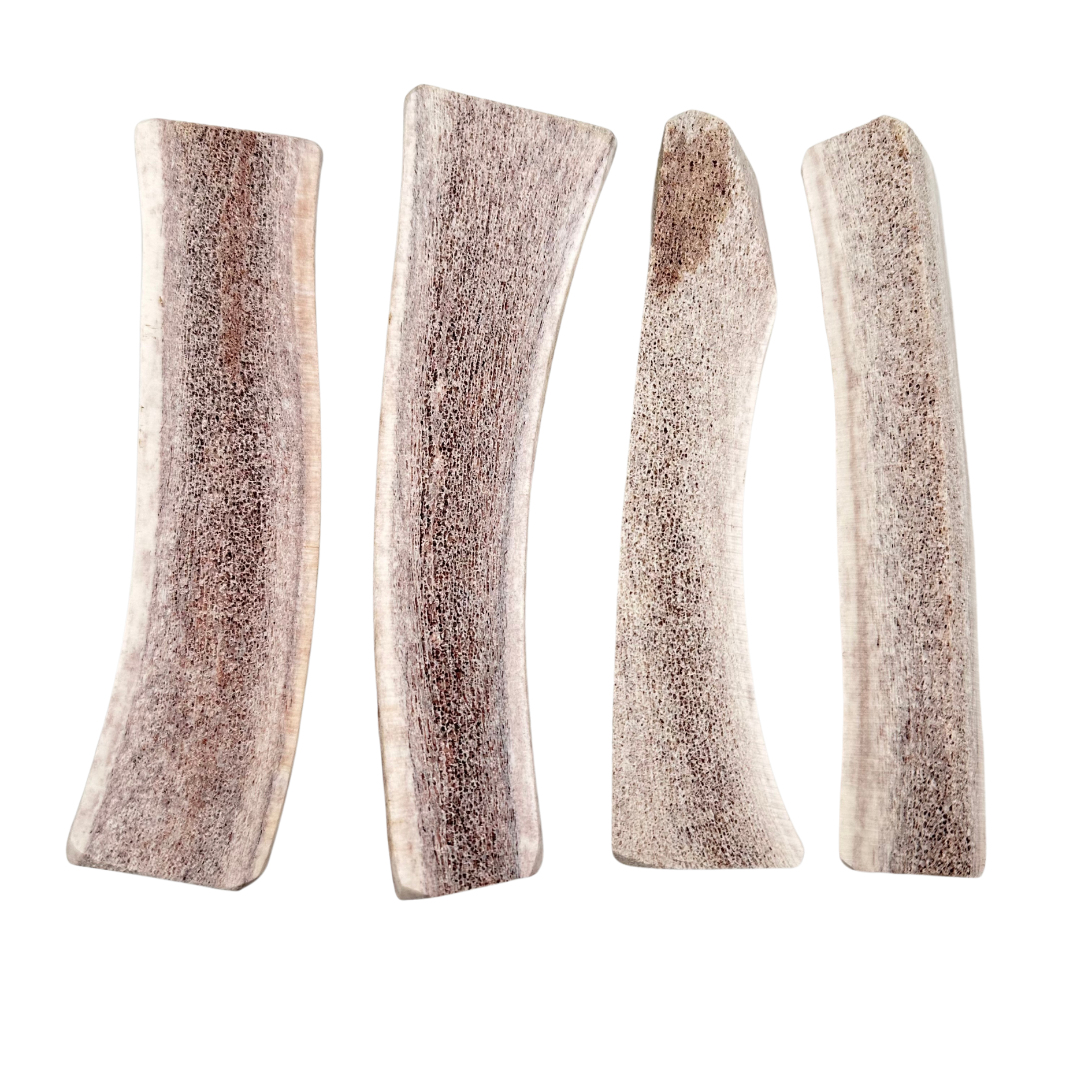
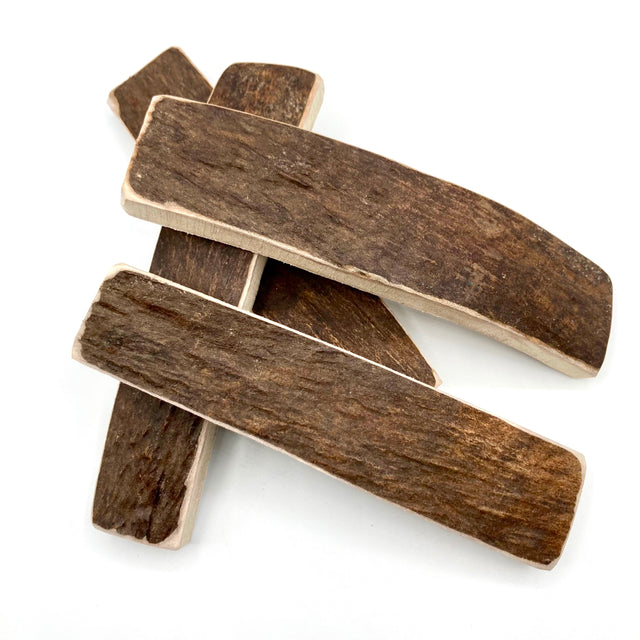
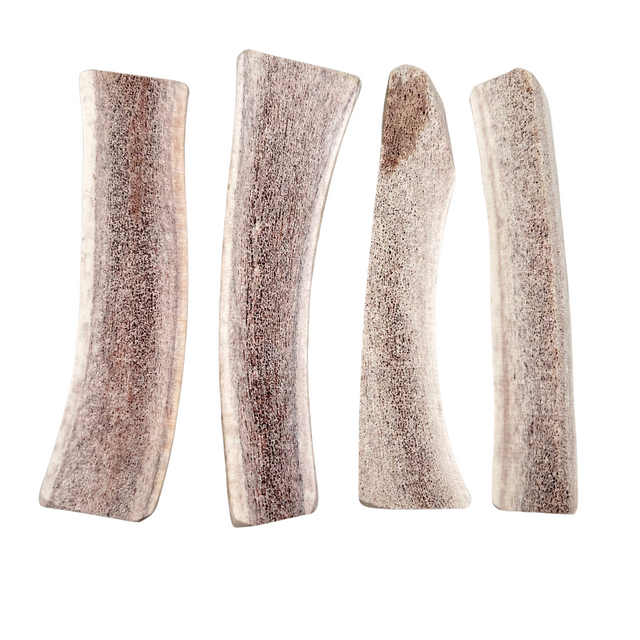
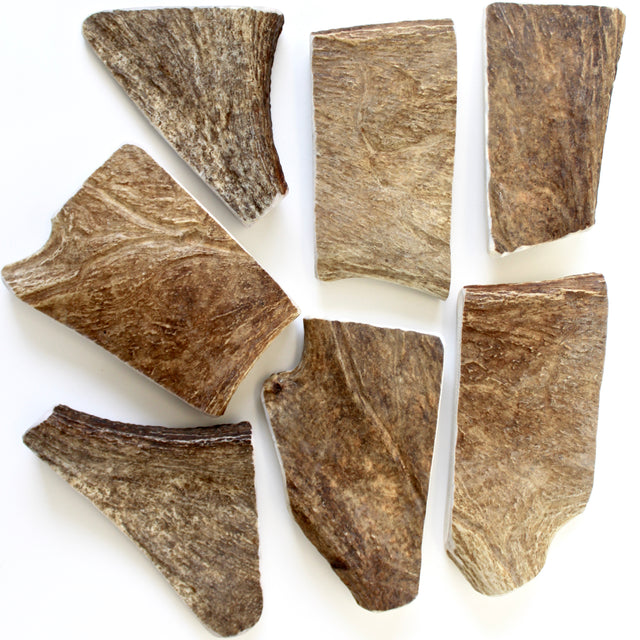
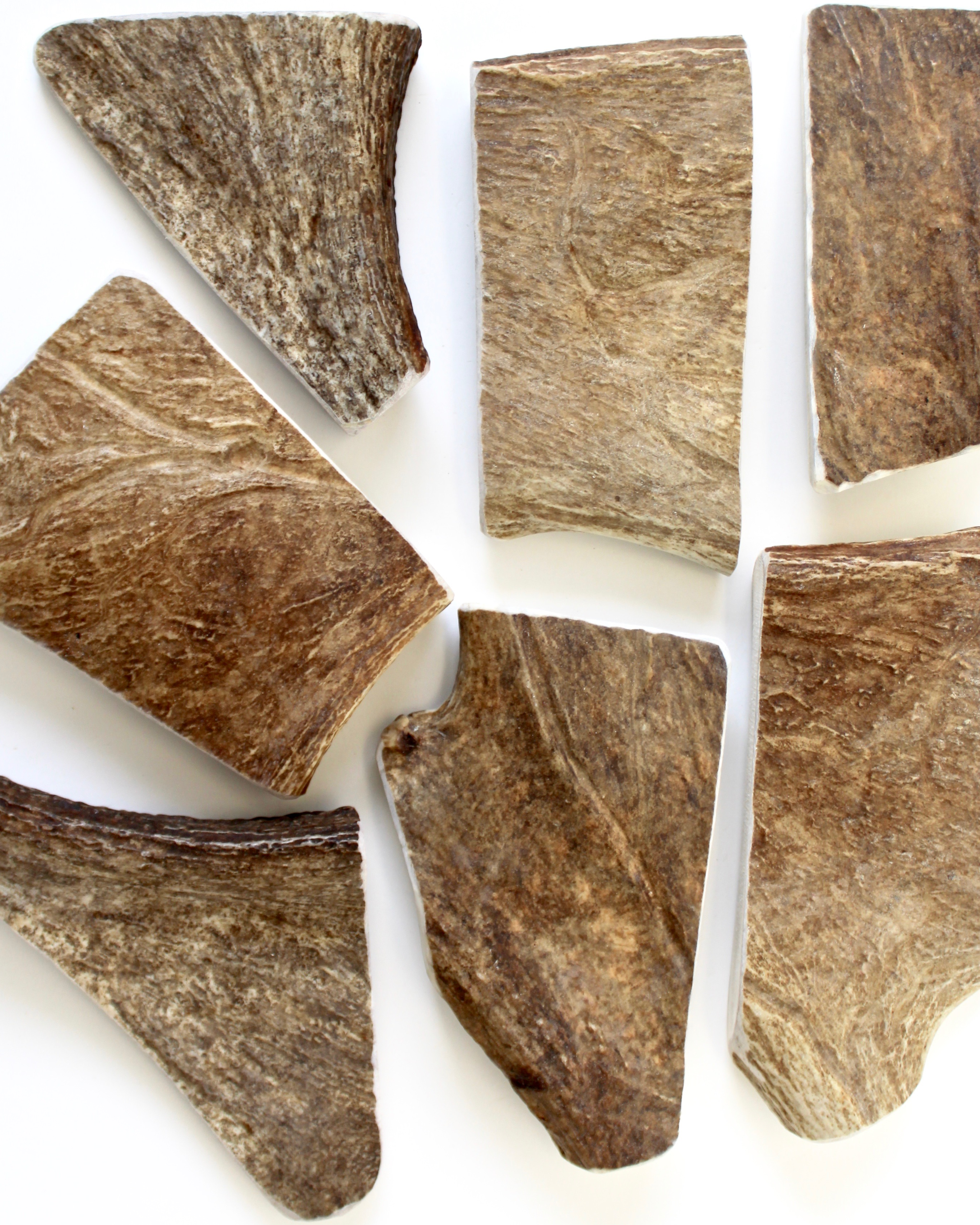
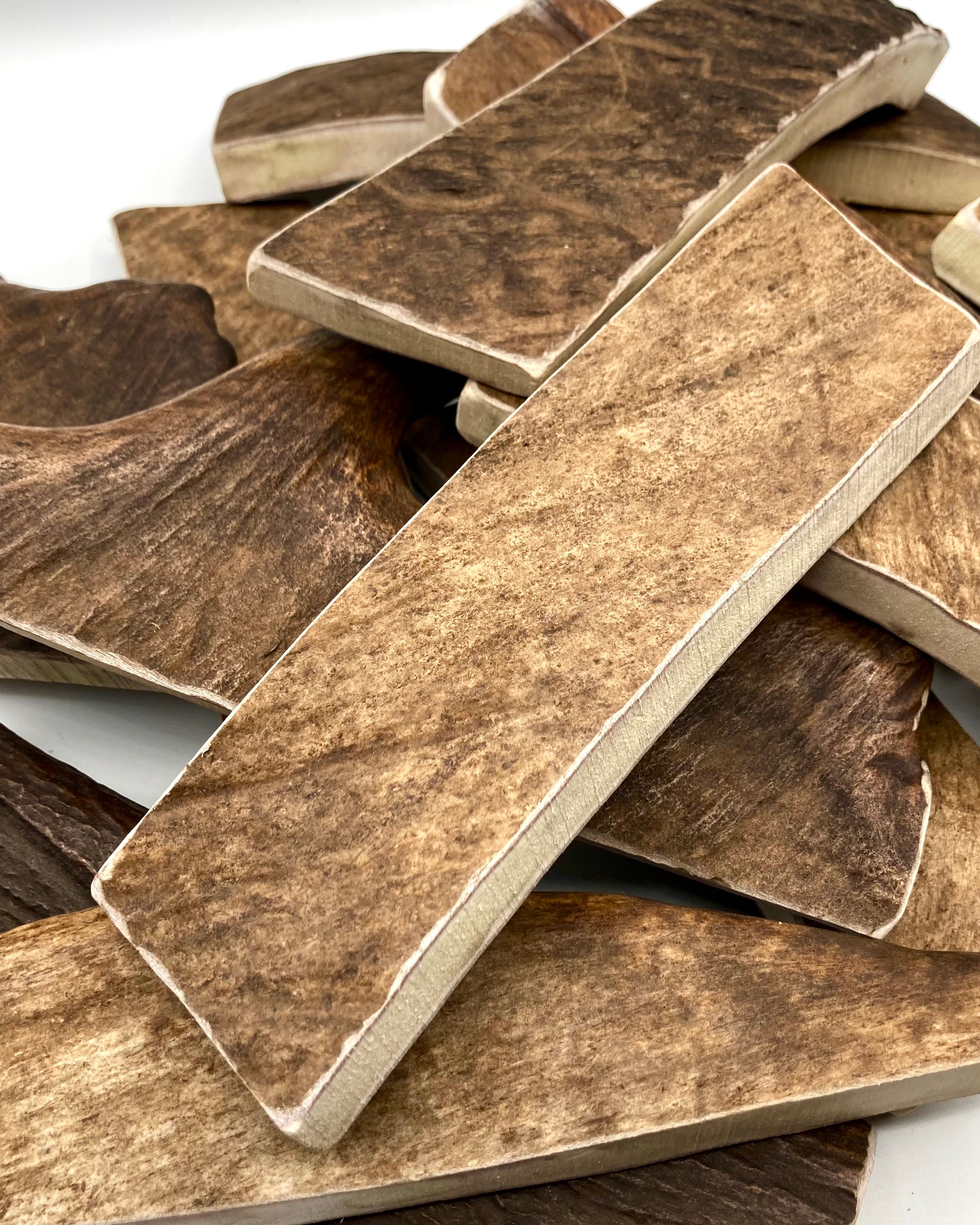
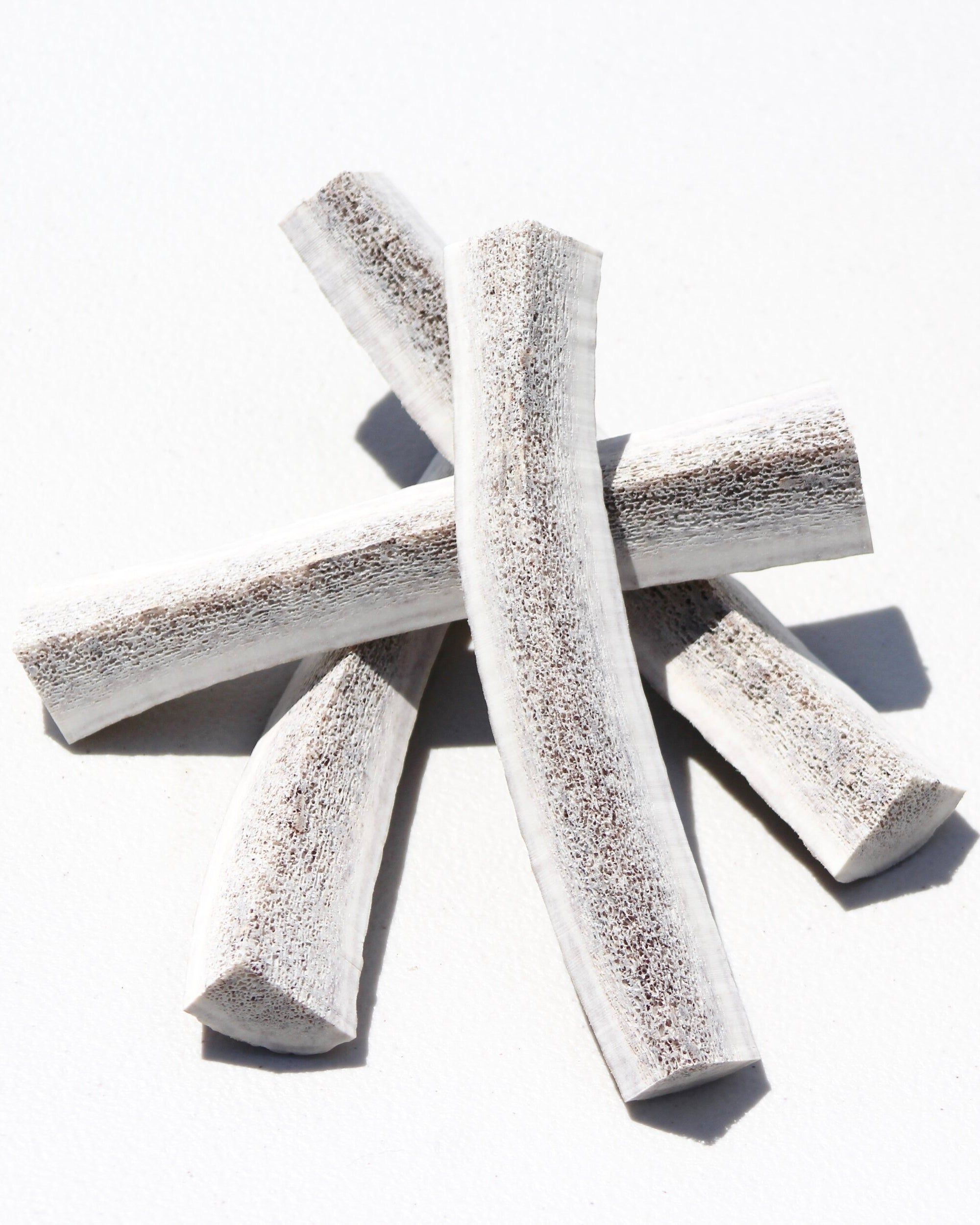
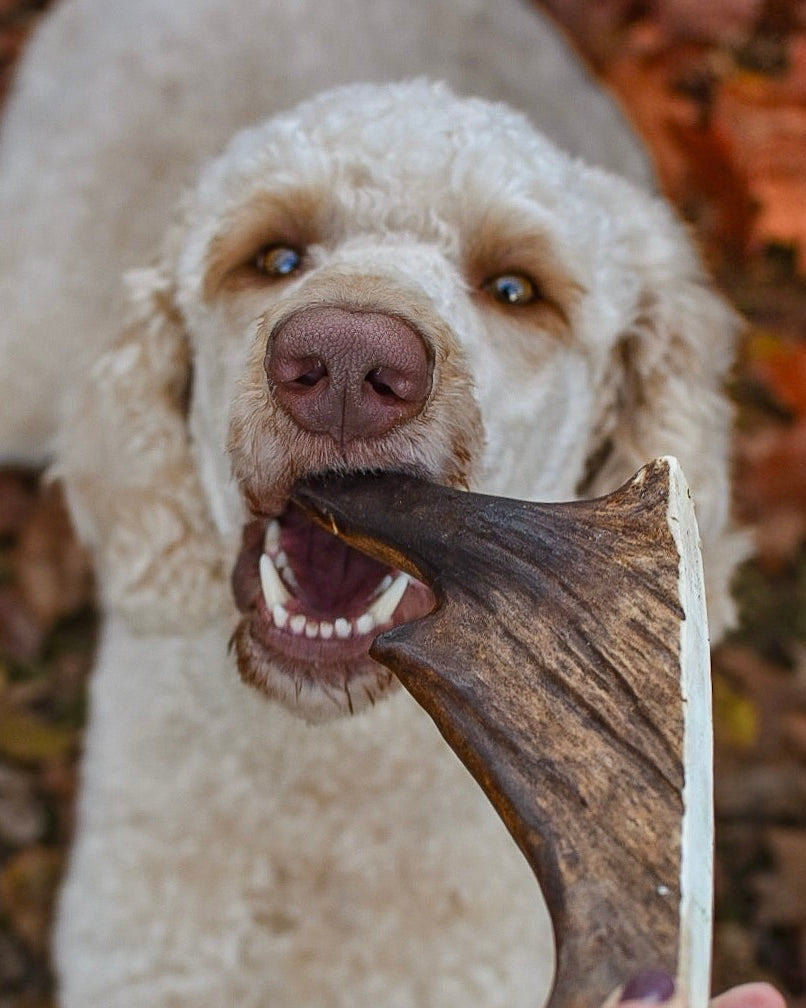
Medium density moose paddles and elk splits are your softest antler options. One important note on elk splits: once the marrow core has been chewed out, get rid of the remaining outer hull. That thin, hard outer shell is just as tempting to a dog as a sharp antler tip, and just as risky to leave lying around.
Moose Munchers are a great place to start if soft is what you're after. They're mostly marrow, which makes them one of the gentlest antler chews you can give a dog.

The bottom line
Safe antler chewing isn't complicated, but it does take a little attention. Blunt the tip, go thick if your dog is a crusher, listen for clattering, and know that softer options exist when durability needs to take a back seat to comfort. Get those four things right and antler chewing becomes what it's supposed to be: hours of calm, focused enrichment for a dog who just wants something real to work on.